
Fault Tree Analysis (FTA) Methodologies & Software
Fault Tree Analysis (FTA) is a top-down, deductive root cause analysis method widely used in safety and reliability engineering. Using Boolean logic and visual tree diagrams, FTA identifies system failures by breaking down a major "top event" into its underlying component causes and basic events.
What is ALD Fault Tree Analysis (FTA) Software?
ALD FTA is an enterprise Fault Tree Analysis software designed for RAMS (Reliability, Availability, Maintainability, Safety) and System Safety engineers. It performs both qualitative and quantitative risk analysis, automatically calculates Minimal Cut Sets (MCS), failure rates, and system unreliability, and strictly complies with international standards such as ARP4761, ARP4754A, ISO 26262, MIL-STD-1629 and MIL-STD-882E.
Safety Commander's FTA module is a simplified FTAnalyzer fully integrated with Safety Commander's product tree and FMECA. It implements and summarizes the first-hand experience gained by ALD FTA experts in hundreds of projects using Safety Commander and other ALD software tools.
Initially developed for Aircraft (civil and military, helicopter, UAV, space)—which represent large, complex Systems of Systems—Safety Commander allows organizations, programs, and projects to resolve all challenges of assuring the safety of highly integrated systems. System structures can be imported from external applications or built manually in RAM Commander or Safety Commander.
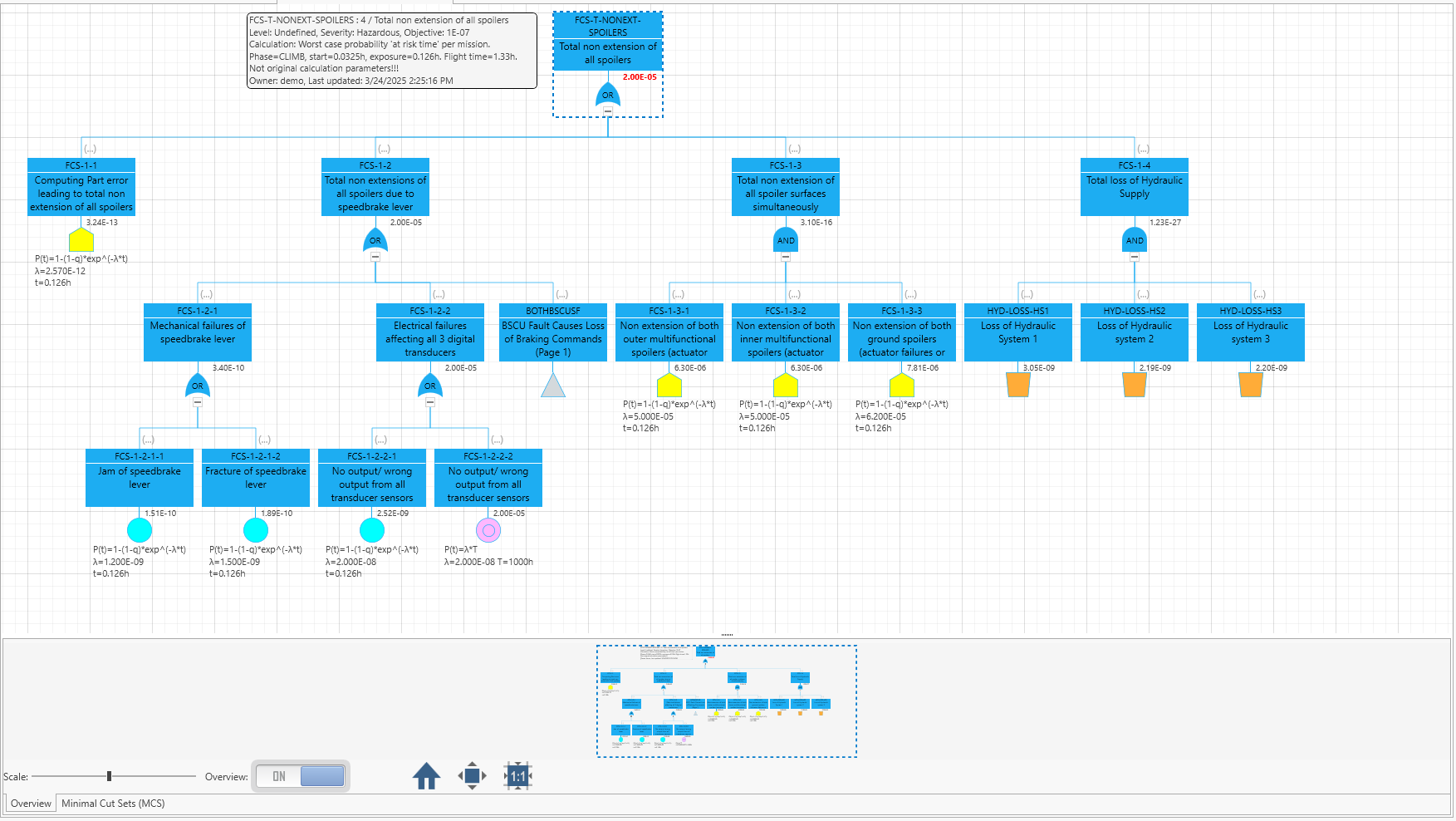
Mathematical Formulas for FTA Calculation
Quantitative Fault Tree Analysis relies on probability and reliability equations to evaluate top-level event probabilities based on gate logic, basic event failure rates, mission duration, and operational profiles.
Methodology & System Integration
Fault Tree Analysis is one of the most widely used methods in system reliability and failure probability analysis. A fault tree provides a graphical representation of logical structures depicting undesired failure events and their root causes using basic events and logic gates.
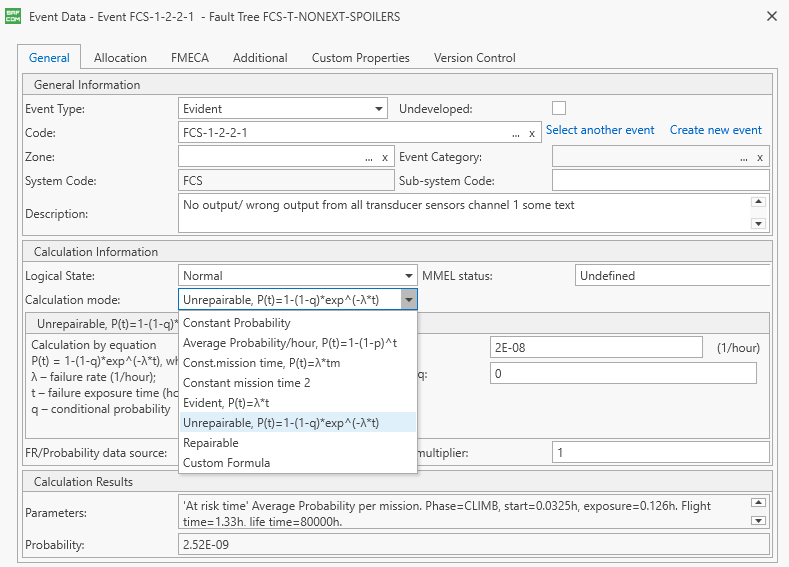
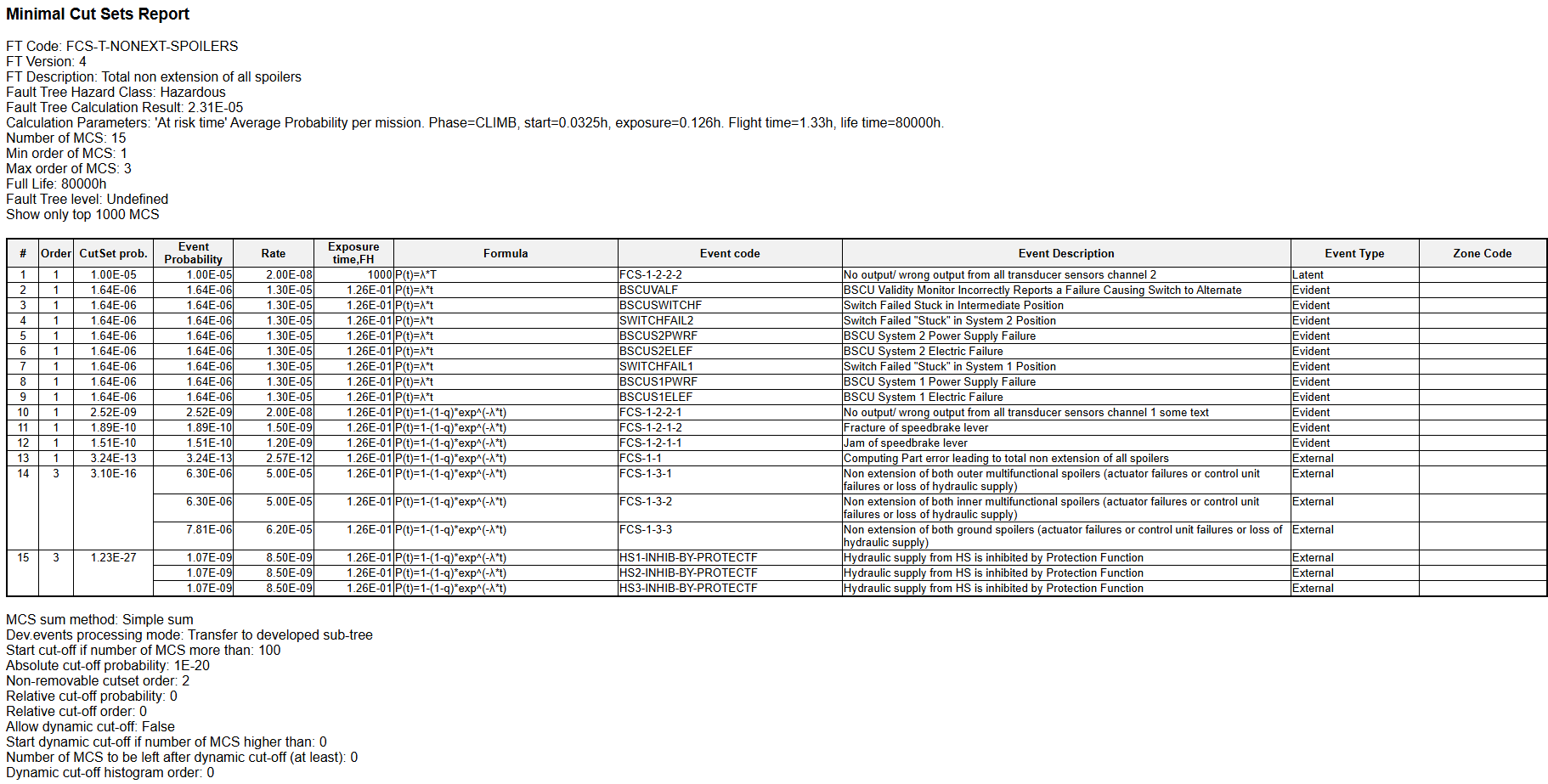
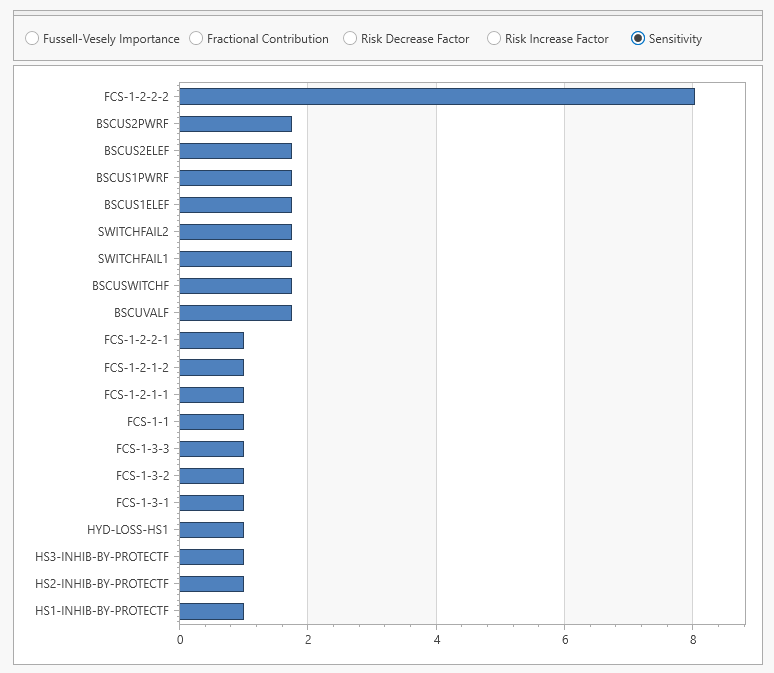
After unavailability calculation and MCS analysis, Importance and Sensitivity Analysis helps engineers select events that contribute most to system unavailability or identify components where small changes drastically impact overall safety.
FTA is uniquely indispensable in analyzing risks and determining combinations of hardware, software, and human failures. It is utilized by other Safety Commander modules, including the Safety Assessment Module (compatible with SAE ARP4761) and MMEL (Master Minimum Equipment List analysis).
FTA Calculation Workflow
Streamlined process for performing deductive safety assessment.
Specify the critical undesired system failure condition.
Build logic hierarchy using AND/OR gates & basic events.
Assign failure rates (λ), mission times, or unavailabilities.
Automatically derive Minimal Cut Sets and gate probabilities.
Evaluate Fussell-Vesely, worst-case, and sensitivity metrics.
Fault Tree Module Features
- Modern Fault Tree editor with zoom and panning
- Direct link between FTA and product tree
- Automatic generation from FMECA
- Import from CAFTA, Isograph, RAM Commander, PTC, OPSA
- Calculation of large trees with MCS truncation control
- Worst-case and time-averaged unavailability options
Industry Standards Supported
Full compliance for aerospace, automotive, defense, and industrial safety requirement guidelines.
- ARP4761 / ARP4754A (Civil Aviation)
- ISO 26262 (Automotive Functional Safety)
- MIL-STD-1629A & MIL-STD-882E
- IEC 61508 / IEC 61511 Functional Safety